5 Ways to Improve Sleep in a Noisy Environment
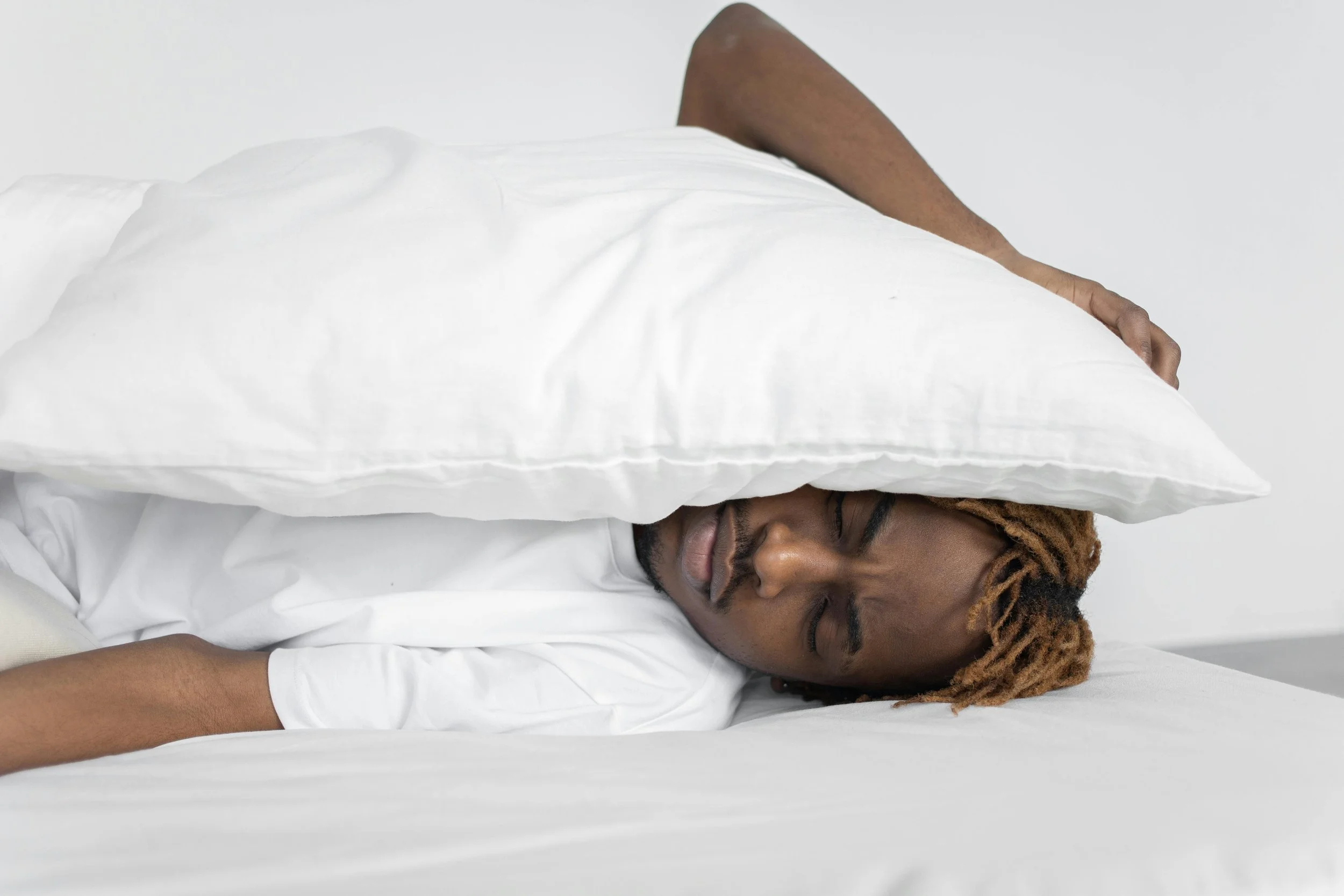
Do you have a hard time sleeping when it’s too loud outside?
Living in a city like New York has its perks, but one major drawback is trying to sleep in all of the noise of the city. If you’re a light sleeper or you struggle to sleep in loud environments, you might have a hard time getting a good night’s rest, which as we’ve discussed before is essential to physical and mental health.
If sleep is so important, why do so many of us have a hard time getting a good night’s sleep?
Evolutionarily speaking, it was probably advantageous for some of us to be very light sleepers. After all, someone had to wake up if the group was in danger, back when that was more of an issue. Now that we’re mostly asleep safely in our beds, though, those predispositions to be woken up at the drop of a hat are at best annoying, and at worst a health issue.
In addition, we all live in a capitalistic culture that prioritizes money and hustling over everything else, and that means that our human needs often suffer. We’re expected to figure out how to manage that on our own time, as precious as that is. For too many of us, there aren’t enough hours in the day to get everything done for work, for our families, and for ourselves, and that can lead to anxiety, which makes falling asleep harder.
Finally, our environments play a huge role in our sleep health. Some people are able to have a perfectly dark, cool, quiet bedroom while others have 3 kids in the bed and a noisy neighbor screaming through the wall. Sometimes there’s a car alarm going off all night outside. Some folks live near the train, and that adds noise that others don’t have to deal with.
So, what can you do to help yourself get a better night's sleep in a noisy environment? Here are some ideas to get you started:
Try white noise
This one can be controversial, because some people hate adding more noise on top of an already noisy environment. White noise, or brown or pink noise, can drown out a lot of outside noise and make it a little easier to calm down and go to sleep.
There are noise machines that cycle through different noise options, like white noise, brown noise, and pink noise, so you can find what works best for your bedroom and the noise that you’re trying to drown out. A lot of them also have rain or storm sounds, if that’s more soothing to you. They’re also usually pretty travel friendly, if you want to take them with you when you go somewhere. A fan can also work as white noise if you have one! Some people prefer to fall asleep to the TV or to a video or podcast. If it helps you fall asleep, do it!
Add soundproofing features
Sometimes a little DIY soundproofing can help dampen the noise enough where you can get to sleep. It’s a little tedious, but if it helps, it’s worth it! Try installing foam squares on your walls (they make decorative ones), hanging sound dampening curtains, adding a door sweep under your door, or even rearranging your furniture so it’s far away from the source of the noise. It might even be worthwhile to add to the insulation in your walls and ceiling if that’s an option, as that can make a huge difference.
When you’re away from home, it won’t be possible to soundproof the place, but there are some things you can do. You can bring your white noise machine, earplugs or an eye mask if you use them. Also, if you’re in a hotel or shared space, try to think about being as far away from noise as you can - so ask for rooms away from elevators or busy parts of the building like the kitchen or bathrooms if that’s possible.
Experiment with earplugs and eye masks
Earplugs aren’t just foam anymore! They have lots of different options now that you can try, whether you want total sound dampening or you want to let some sound in still. There are also special headbands designed for sleep so you can wear headphones to sleep and listen to music or meditations or podcasts - whatever will make you sleepy.
Sometimes light is the source of sleep disturbances, so try wearing an eye mask if you can tolerate it. There are ones that just drape over your face and ones that have a band that goes all the way around, so you can experiment with what works best for you.
Train yourself with a routine
Falling asleep is something that you do every day, and it’s possible to teach yourself to fall asleep even under less than ideal conditions. One way to do that is to establish a bedtime routine that you follow every single day (even on the weekends). This teaches your brain and body that it’s bedtime, and it’s time to slow down and go to sleep.
It might be tricky at first, so use all of your tools like white noise, earplugs, eye masks, and whatever else helps you signal to yourself that it’s time to wind down and sleep. Over time, you’ll get used to falling asleep, even if it’s in a noisier environment than you’re used to.
Make sure there’s no medical issue going on
Finally, sometimes people struggle with sleep due to an underlying medical condition like sleep apnea or restless leg syndrome. If you’ve tried everything you can think of and you’re still not able to get a good night’s sleep, it might be time to call on a professional to get their opinion and see if there’s anything else going on.
It can be tricky to get a good night’s sleep in a noisy environment like New York City, but it’s not impossible! Improving your sleep isn’t just about feeling less tired; it’s about enhancing your overall quality of life. If you’re finding it hard to achieve restful sleep on your own, we can help. Our therapists at Anchor Counseling New York are accepting new clients - schedule an appointment today to get started.
