Teletherapy vs. In-Person: Which Is Right for You?
Teletherapy and in-person therapy are both great options for mental health care. So how can you decide which one is right for you?
There are pros and cons to each style of therapy, and reasons why both could be a good fit for you. Everyone’s preferences are different, but in general, here are some things to consider as you determine which is the best option for you right now.
What is teletherapy?
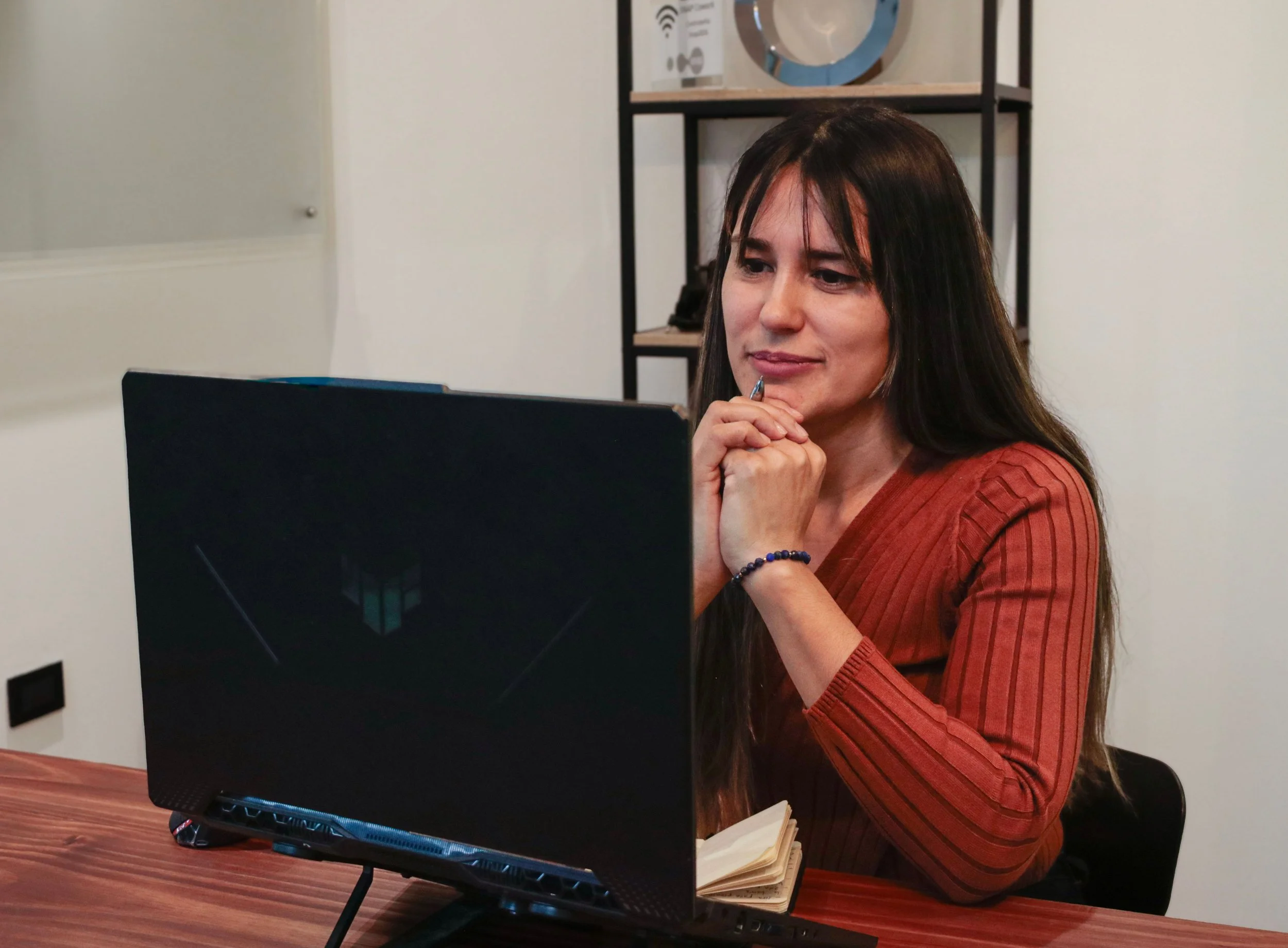
Teletherapy, also known as online therapy or video therapy, is a type of therapy that is delivered over video online. Studies have found that there is no significant difference in quality or outcomes between in-person and virtual therapy, and that clients who utilize telehealth are satisfied with their treatment and may even prefer it over in-person treatment.
Many therapy practices offer teletherapy exclusively or in addition to in-person therapy.
What are the pros of teletherapy?
Teletherapy was offered before the pandemic in 2020, but it really soared in popularity as we all stayed home during quarantine. For many, it became the only way to meet with providers of all kinds, not just therapists.
You might even still meet with some providers online today and find that it’s more convenient for you to have video appointments rather than in-person appointments. That’s one of the main benefits of teletherapy: convenience. Rather than having to spend time getting to and from appointments, all you have to do is find a private space and log on.
Another benefit to teletherapy is that it’s more accessible. For people who aren’t able to access an in-person appointment at offices that have stairs or entrances that aren’t ADA accessible, video appointments allow them to work with providers that they wouldn’t normally have access to.
In addition, if you have a cold or other contagious illness that would keep you out of the office, online therapy gives you a way to attend therapy (if you feel well enough, of course) rather than having to cancel your appointment and incur a cancellation fee.
Some people feel more comfortable talking to someone through a screen rather than sharing a physical space with another person, and therefore benefit more from online therapy than in-person therapy. Some folks also feel more comfortable not having to travel to a therapist’s office where someone might see them.
People may also feel more comfortable or safe in their own space rather than a therapy office, and therefore more likely to open up with their therapist. You can dress in your comfiest clothes, rather than having to get dressed to leave the house. You can cuddle your pet or a favorite object during a session if that helps.
Finally, via online therapy, you can often work with therapists that you might not be able to work with in-person. You can usually work with anyone who is licensed in your state online, rather than someone who is in your immediate area in-person. This greatly widens the pool of available therapists and makes it more likely that you'll find a therapist who is a good fit for you.
What are the cons of teletherapy?
There are some drawbacks to teletherapy that are important to consider. When you’re not in the same room as your therapist, it’s harder for them to read your nonverbal communication, like body language, which can be an important part of therapy.
Online therapy may not be appropriate for more serious mental health conditions, which often require in-person treatment. Every person is different, but often people experiencing acute crisis like suicidal ideation are more appropriate for in-person care. Other conditions that likely require in-person treatment are severe eating disorders, schizophrenia or disorders where a person is in active psychosis, severe substance use disorders, or folks experiencing severe bipolar episodes.
Another drawback to online therapy is that not everyone has a reliable internet connection, reliable technology to access the internet, or a private space from which to conduct a therapy session. Particularly in a city like New York, it’s hard to find a quiet, private space in tiny apartments when you have roommates or kids running around. In a video session, you may experience connectivity issues where the video freezes or cuts out entirely. Many therapists who offer online therapy sessions will have a backup plan for when the technology isn’t working, but it’s still important to consider the disruption to your session.
What is in-person therapy?
In-person therapy is probably what you picture when you imagine a therapy session: you go to a therapist’s office, you sit across from them, and you talk for an hour. In-person therapy can encompass many different modalities, like Dialectical Behavior Therapy (DBT), Cognitive Behavioral Therapy (CBT), Psychodynamic Therapy, Somatic Therapy, and more.
Many therapists will meet with clients in-person first to determine if online is a good fit. Some areas or insurance providers have regulations that state that providers must meet with clients every so often in person in order to verify that online sessions are still appropriate. In general, in-person sessions and online sessions should be covered the same.
What are the pros of in-person therapy?
Many people find the ritual of going to therapy in-person to be comforting. Going to the office and waiting in the waiting room allows you to get into the therapy headspace. This can be helpful to transition into the mindset of a therapy session, rather than having to jump into it from whatever you’re doing before an online session.
Therapy offices are designed with privacy in mind, so you don’t have to worry about finding a quiet, private space. That’s already taken care of for you, and you can just focus on talking on what you want to talk about with your therapist.
Some people find that it’s easier to draw a line between therapy and real life when they go to therapy sessions at the office. Instead of having to talk about hard or traumatic things in their own space, that’s all left at the therapy office. That can be comforting, so you don’t have to relive painful memories or trauma in your own space.
Another positive aspect of in-person therapy is that your therapist can read your nonverbal communication in a way that they can’t when you’re talking through a screen. They can see your body language, eye contact, and your appearance in a different way than they can through a video.
Finally, some mental health conditions are more appropriate for in-person therapy than online therapy. If that’s the case for you, in-person sessions are a better fit for the efficacy of your treatment and for your safety.
What are the cons of in-person therapy?
In-person therapy is often more difficult to access physically. This is true because you have to make time to physically travel to the office, wait there, have your appointment, then travel back home (or to work, or wherever you’re going next). For people who are disabled, they often can’t access in-person therapy offices entirely. The cost of commuting, the time spent traveling, and the disruption to your daily routine can all make in-person sessions less convenient and appealing than online sessions.
In-person therapy can limit the therapists available to you in a way that online therapy does not. Rather than being limited to the therapists in your city or in the neighborhoods around you, online therapy allows you to see anyone licensed in your state.
How can you decide what’s right for you?
Deciding what type of therapy is right for you is a personal decision. If you read over these pros and cons and feel strongly about any of them, that can be a hint that one or the other might be a good fit for you.
Some people have a strong preference for in-person therapy or teletherapy, and some people don’t feel strongly and are okay with a combination of the two, depending on what’s going on in their lives that week.
You can always call the therapy office you’re interested in working with and discuss your questions with them to help decide if online therapy is a good option for your needs.
Many therapy offices, including Anchor Therapy, offer virtual therapy only to provide flexibility for clients and to be accessible to as many people as possible in New York.
If you’re interested in working with an online therapist, we’re accepting new clients and would love to work with you! You can learn more about our services here and contact us here to get started.
